
It started in Vallejo
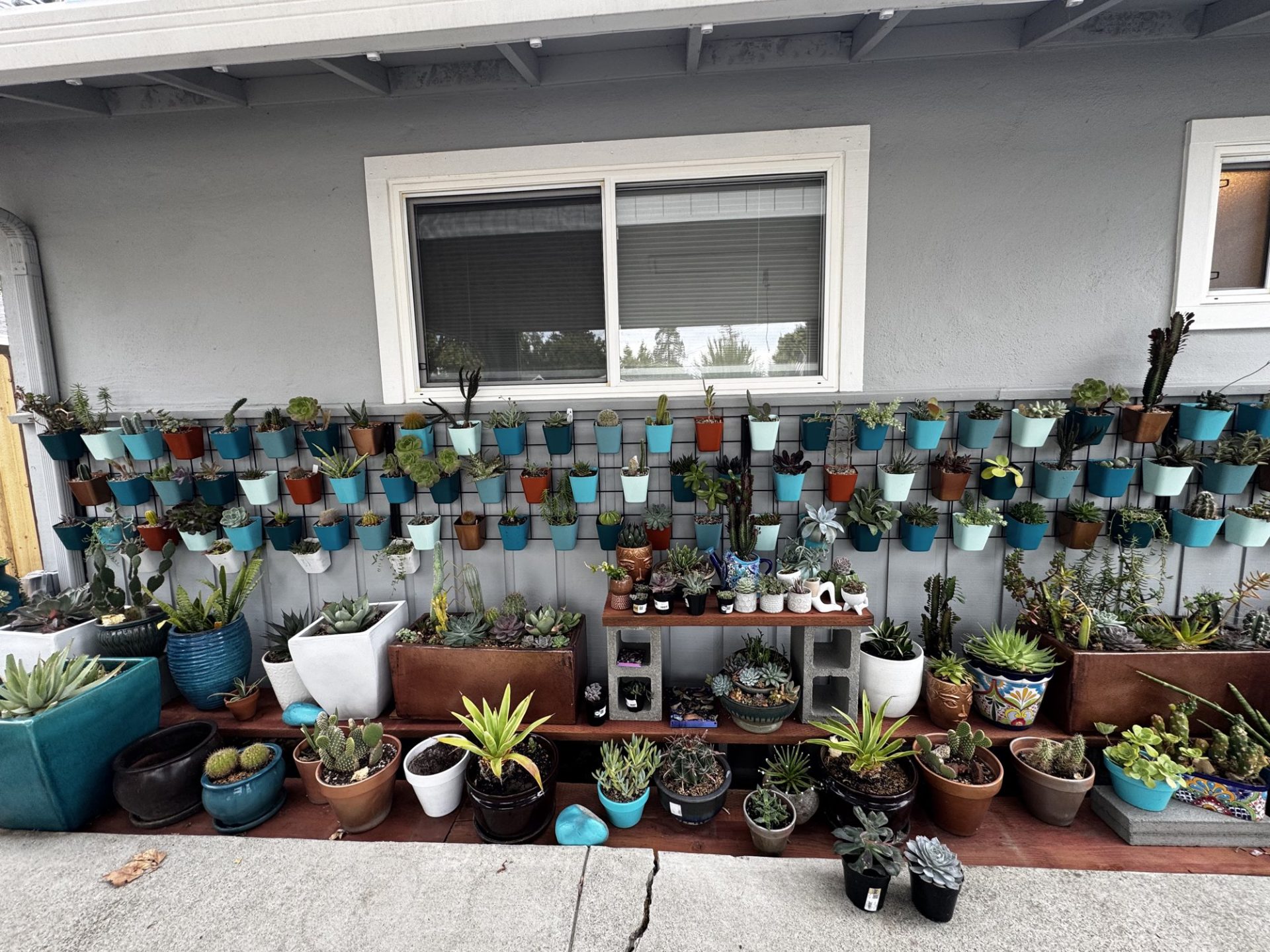
At the start of the pandemic, I brought every plant home from my office. That was a lot of plants and nowhere near enough space. Around the same time, I saw a wall at a woman's house in Vallejo: hog fencing mounted to the house, covered in green hanging planters, every one packed with succulents and trailing plants spilling over the bottom row. I couldn't stop thinking about it.
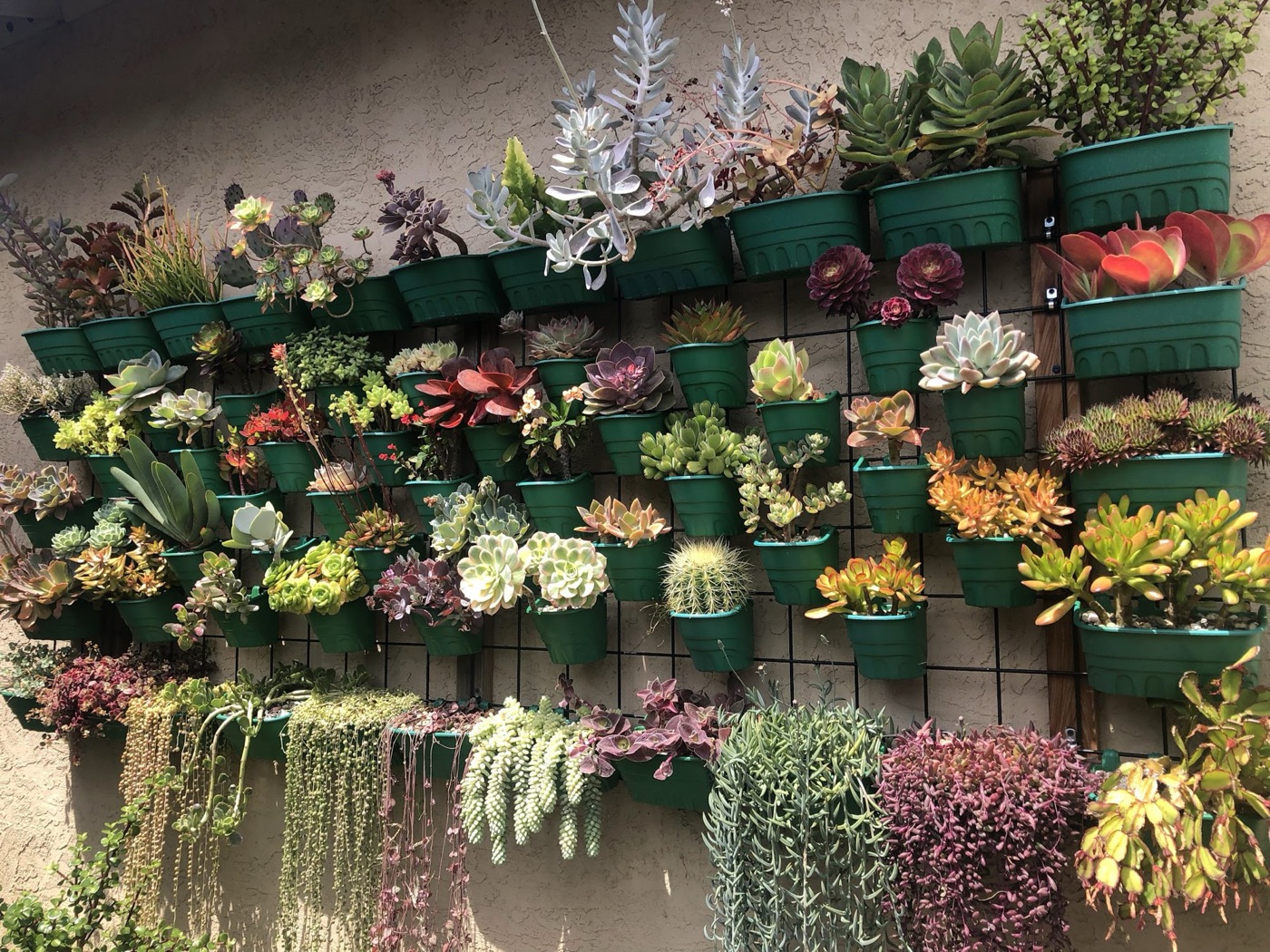
So I built my own on the back fence at my parents' house. I kept her idea of hog fencing: galvanized utility panels from Tractor Supply with 4-inch squares. For the cups, I went with IKEA SUNNERSTA containers. They're sold as kitchen rail accessories for $0.99 each, and they have a hook molded into the back that drops right onto the grid. I painted the panels pink, left the cups white, and drilled a drainage hole in every one.
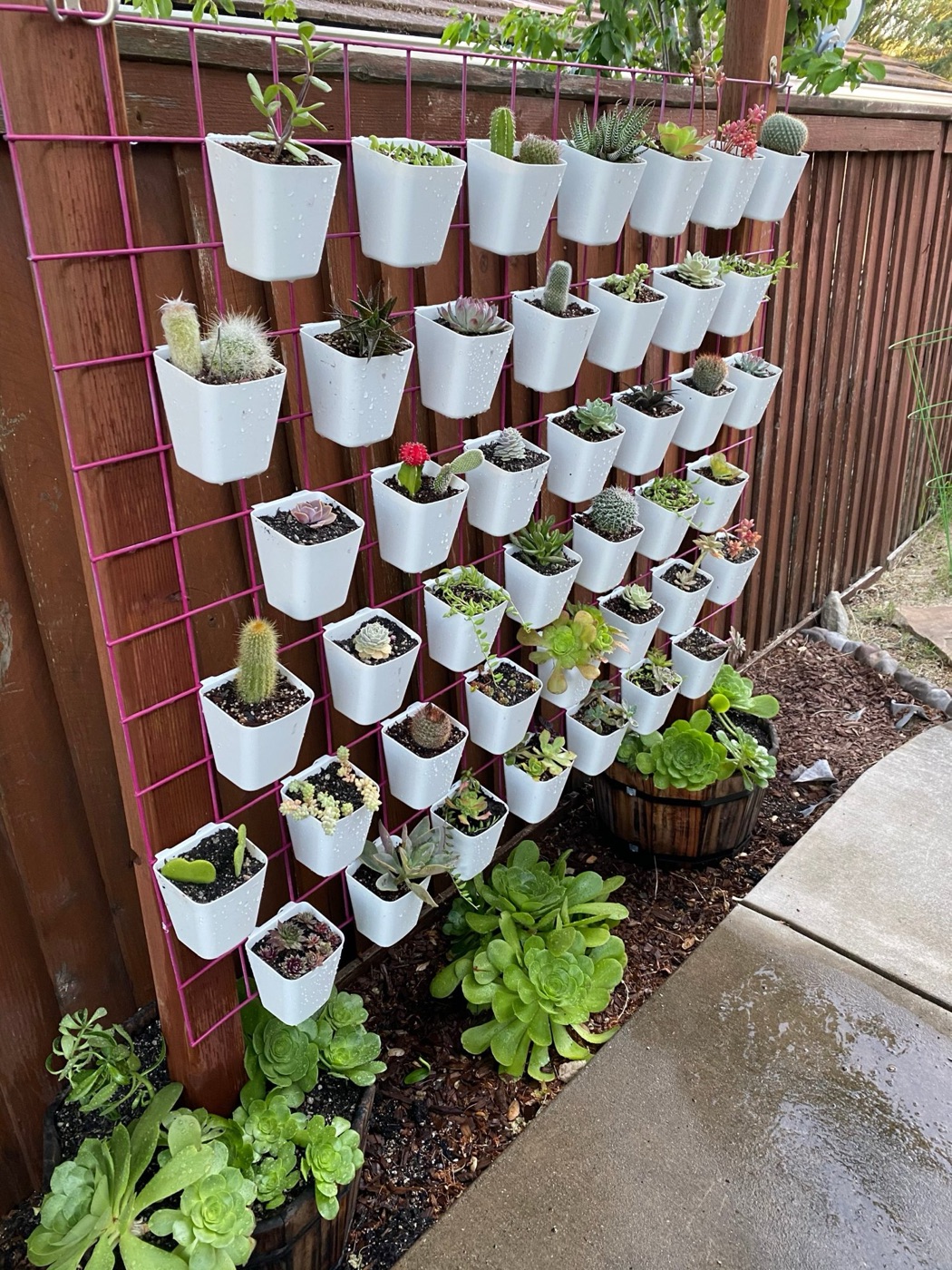
By the summer of 2021, it was full.
Moving it home
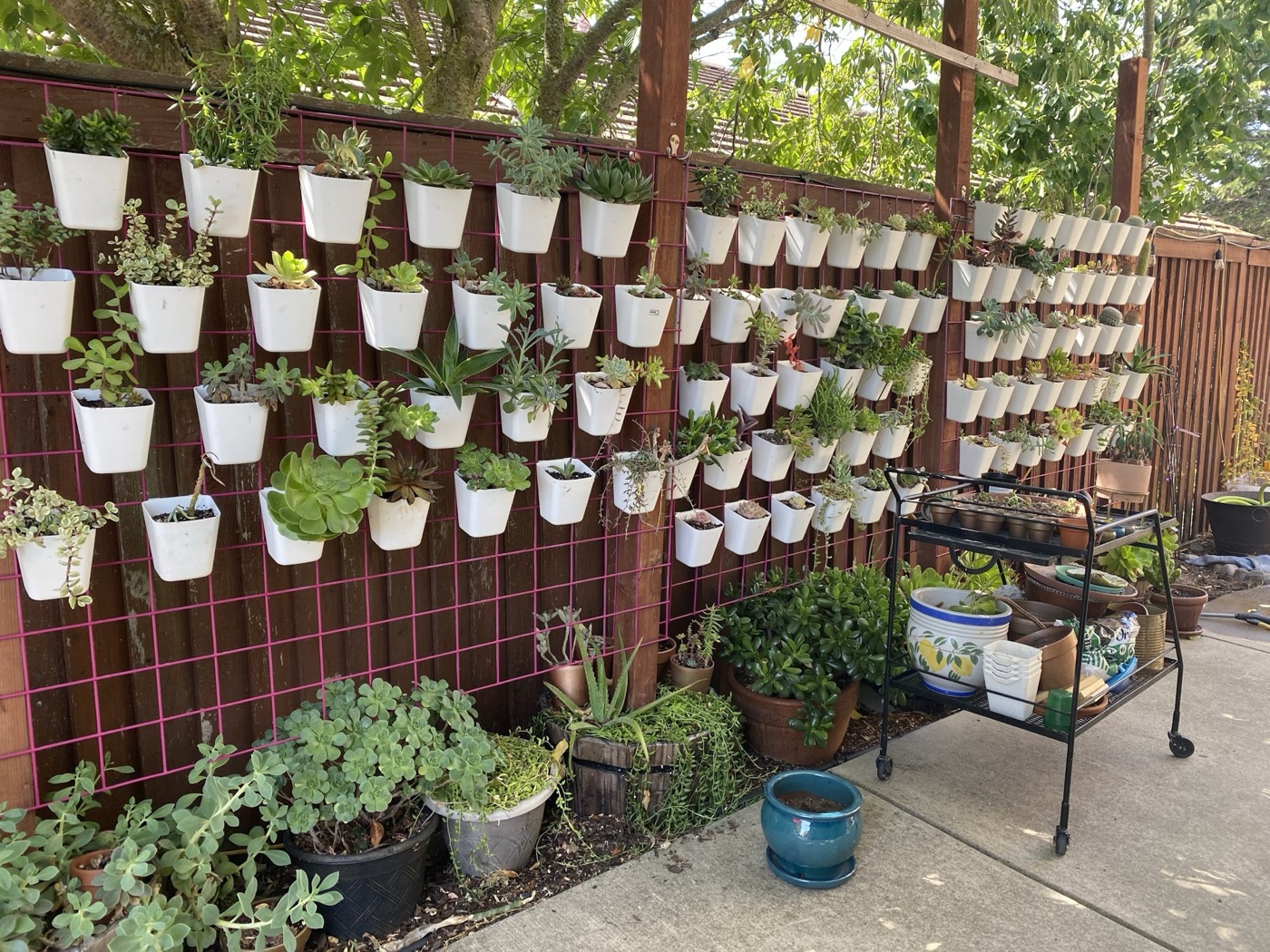
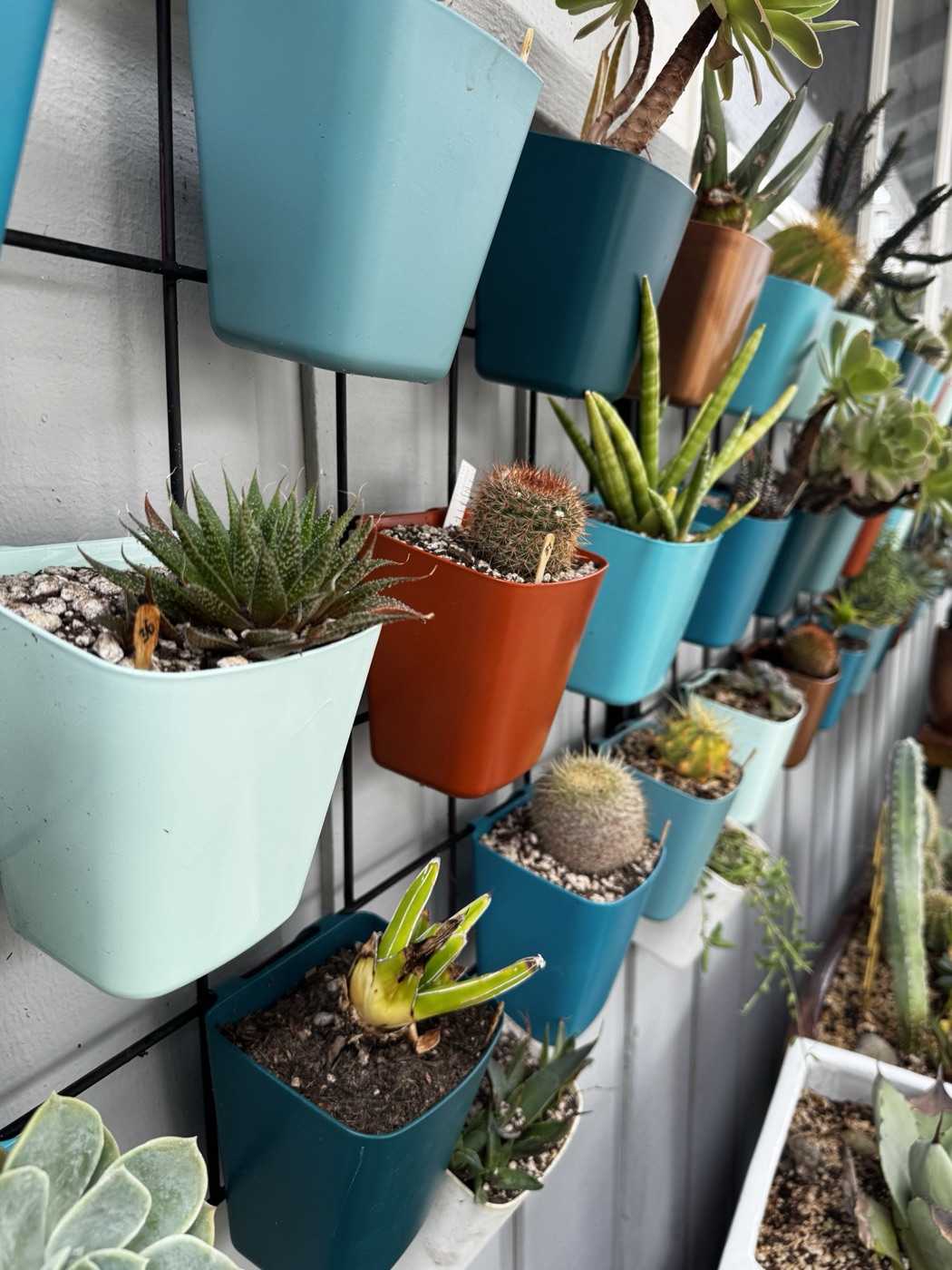
In August 2025, the wall came with me to our house. It went on the gray siding under the carport, a wall that had held nothing at all. The few pots in this photo were the first things to arrive.
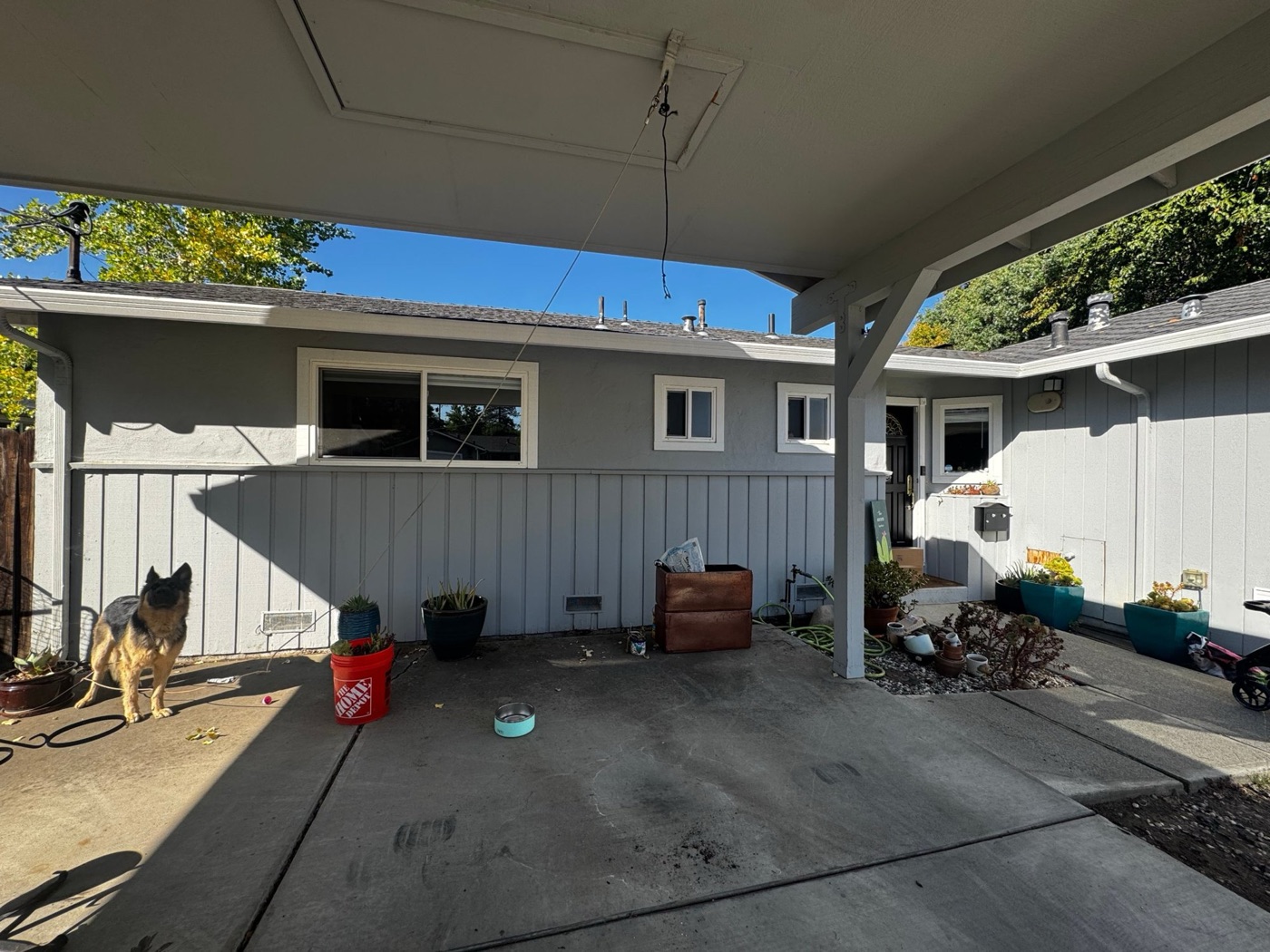
I repainted the grid black with Rust-Oleum 2X spray paint. Pink worked at my parents' house, but here I wanted something cleaner and more modern. The cups stayed white. A lot of them were empty, so I replanted from the potted collection I already had.
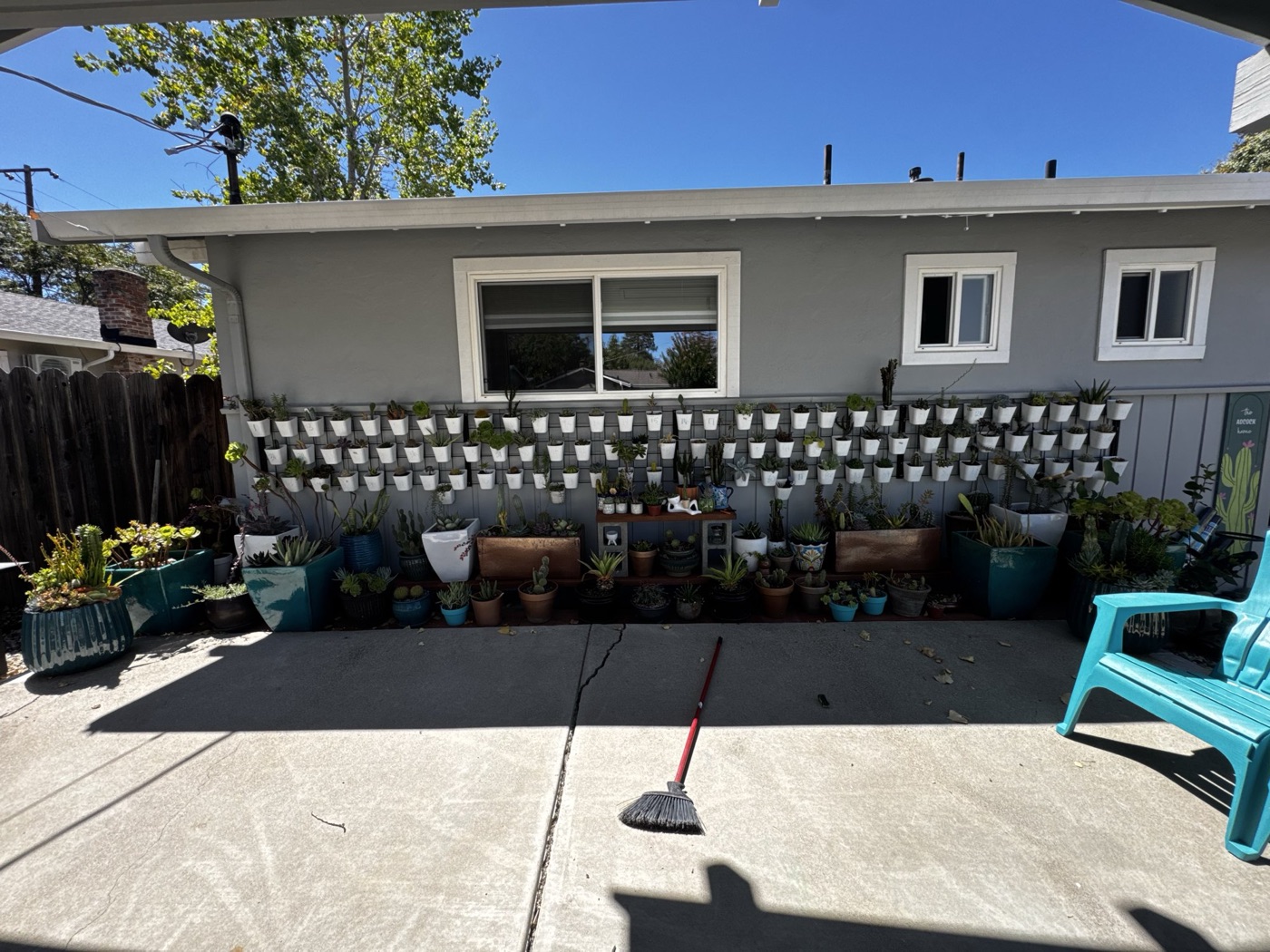
Along the base, we built shelving for the bigger pots out of standard cinderblocks and pressure-treated 12-foot 2x12 planks, left raw. One plank had to be cut down, and the leftover piece became the small raised shelf in the middle, which turned into the focal point of the whole setup.
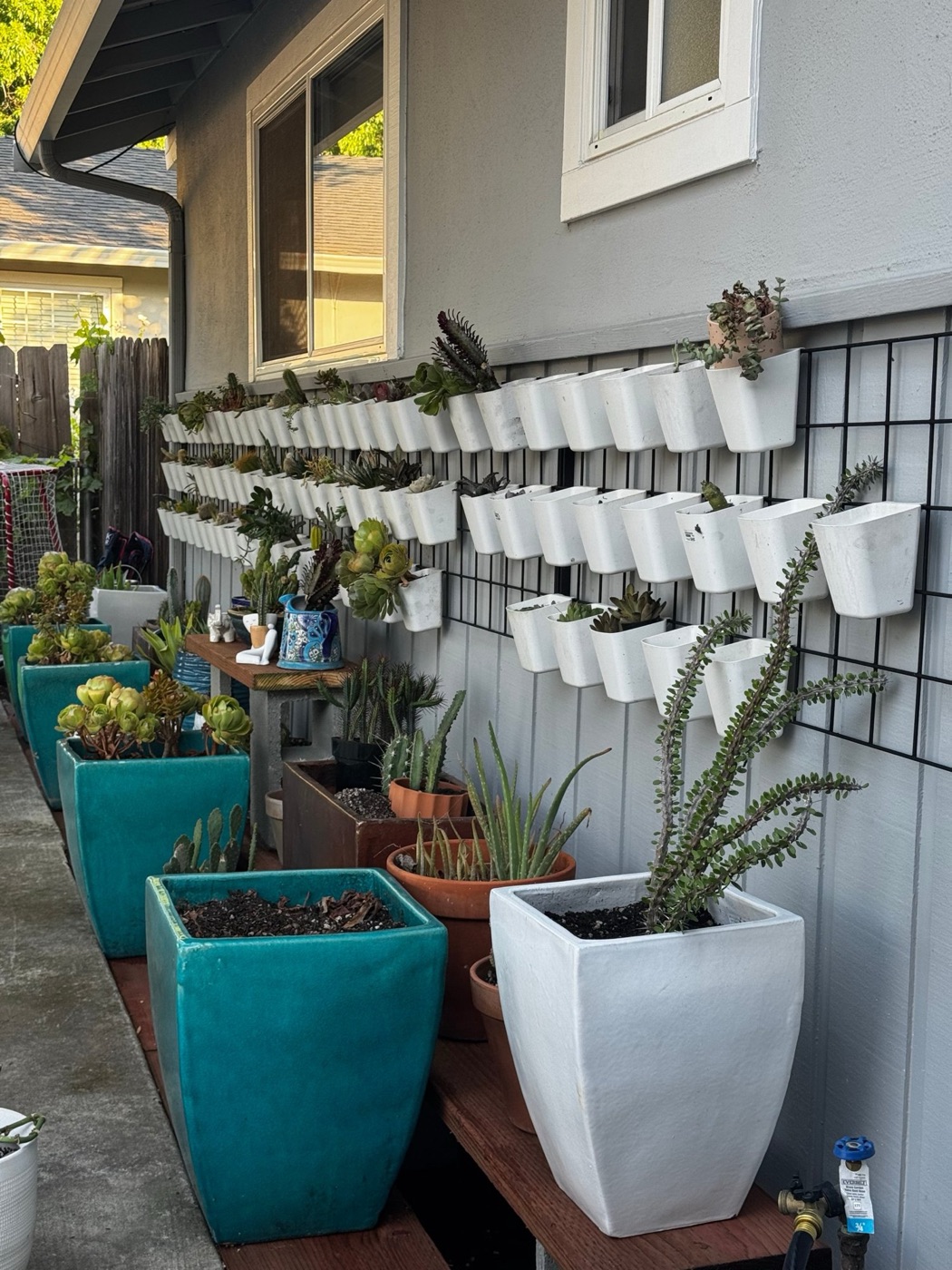
A year later, it was full again.
Why the cups changed color
Once the wall was full, the white started to bother me. Against the gray house, it looked stark. Some cups were stained or sun-worn, and after six years outdoors, a couple had cracked and broken. Painting them was partly about looks and partly about protecting the plastic.
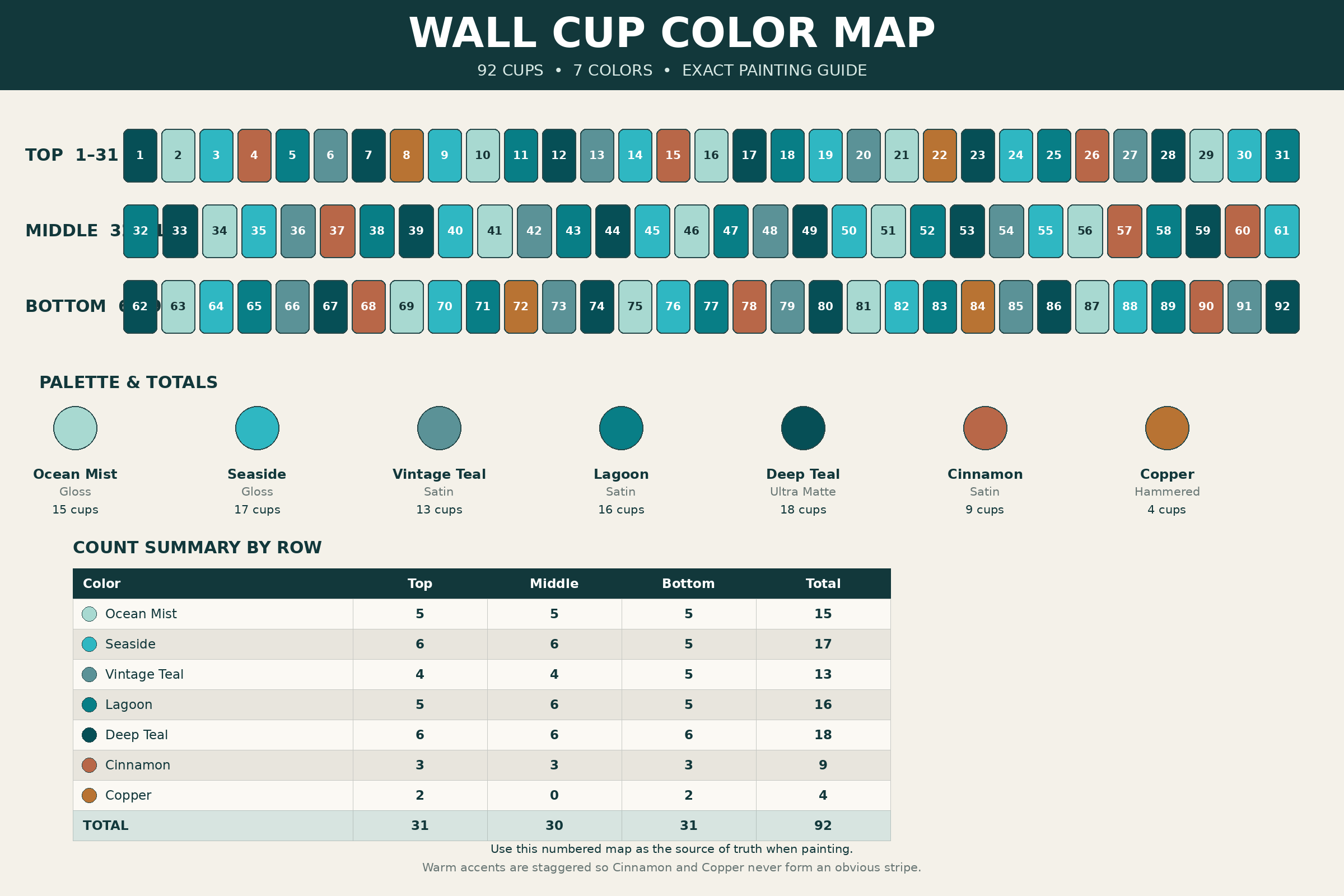
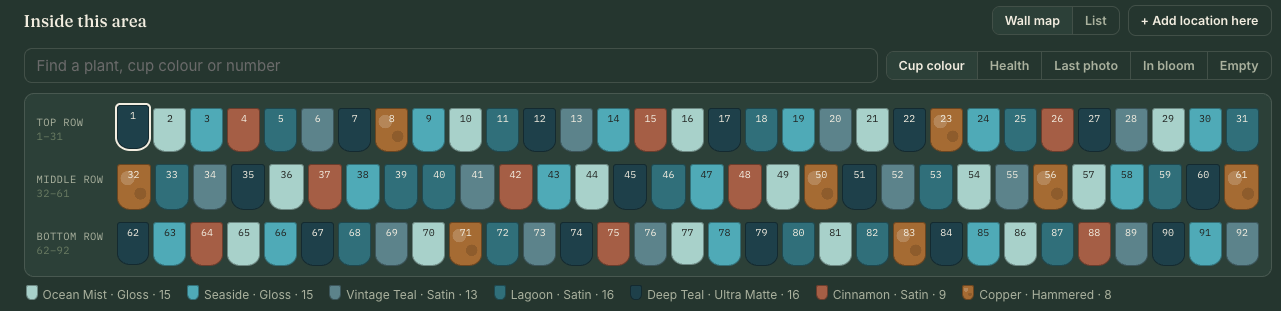
I worked out the palette with ChatGPT, looking for colors that would suit the house as it is now and the deep charcoal we plan to paint it someday. We landed on seven: five teals running from pale mint to nearly black, plus cinnamon and copper as warm accents. Then we mapped all 92 cups by number so the warm colors would never line up into an obvious stripe. I followed the map loosely.
The primer was the step that mattered most. Polypropylene is slick, and regular spray paint peels right off it. So every cup got a coat of Rust-Oleum Automotive Adhesion Promoter first. It's a clear spray made for priming plastic car parts like bumpers and trim, and it gives the paint something to grip. Then two coats of Rust-Oleum color on top.
Ninety-two cups
The wall now holds 92 cups in three rows: 31 on top, 30 in the middle, 31 on the bottom. Every cup has a number, and every number is a location in the app I built to track the collection, so each plant on the wall has an exact address. The app now has a wall map too, with every cup shown in the color it actually is. Not the plan. The real thing.
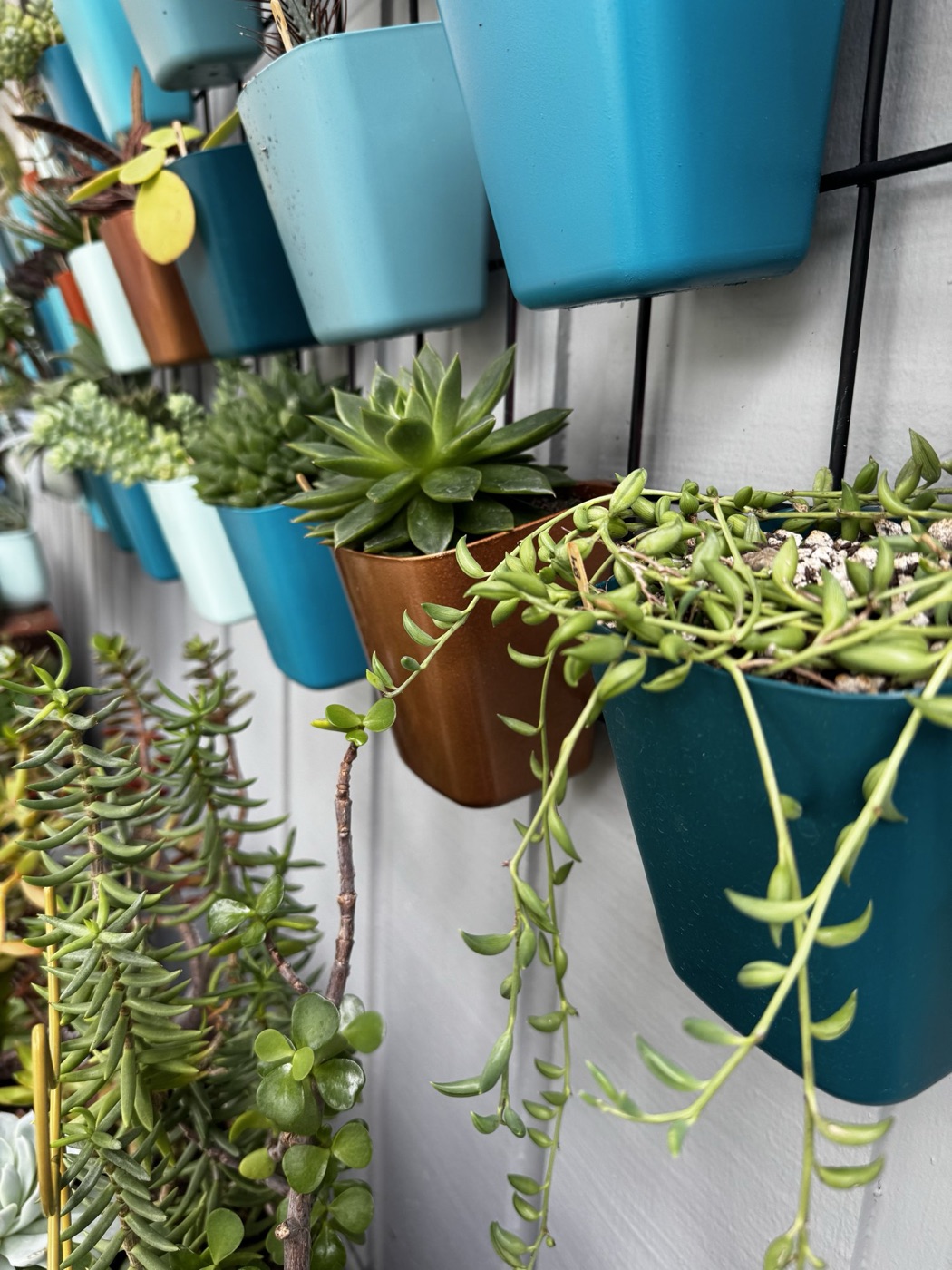
Six years, two houses, three paint jobs. Ninety-two cups at $0.99 each.
