Succulents,and rather a lot of them.

Succulents and cacti, mostly. What I grow, what I have learned, the resources I keep going back to... and the catalogue I built to keep track of it all.

A watercolour of potted succulents: a pink-edged echeveria, a haworthia, and trailing string-of-pearls
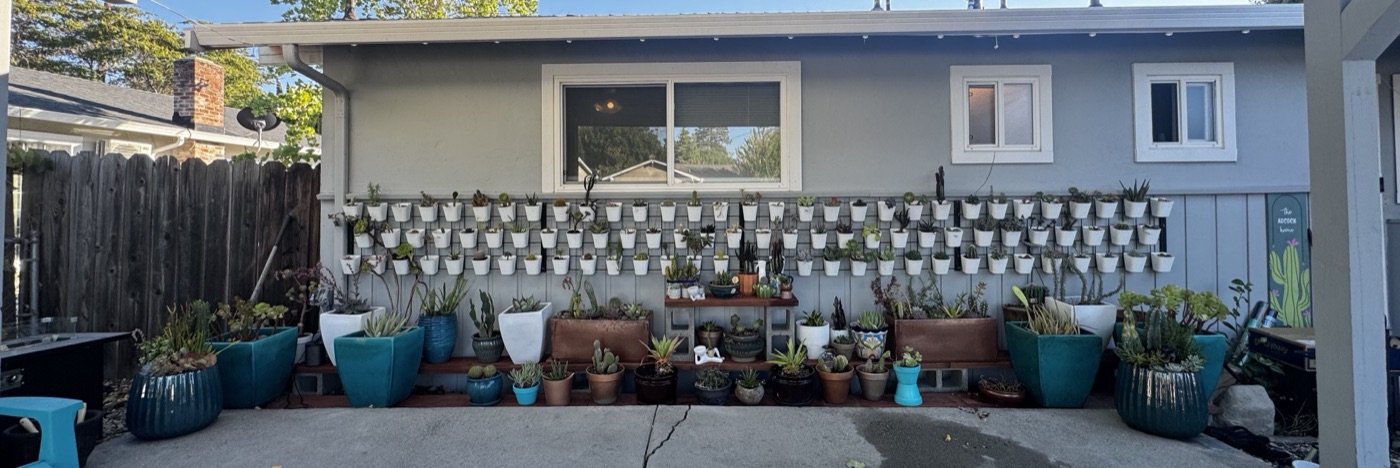
A house wall hung with rows of white wall-mounted pots of succulents, with larger glazed planters and potted cacti along the ground beneath
The front yard today... most of the collection in one frame.

How this started

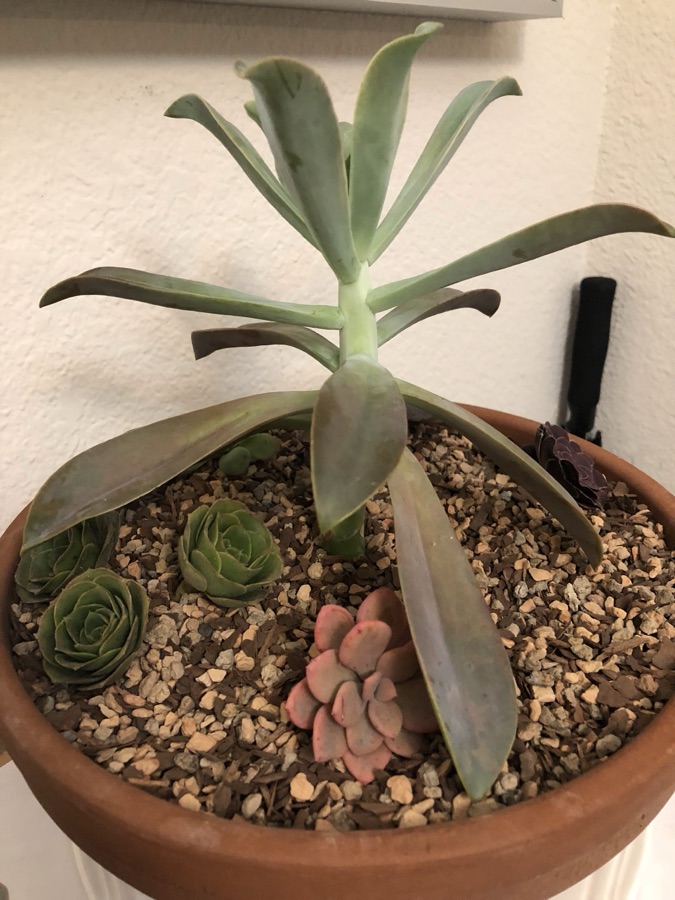
In September 2018, I was gifted a Graptoveria ‘Fred Ives.’ I kept it indoors in a tiny apartment with almost no natural light, and it got extremely leggy. That single question, why is this plant doing that? opened a door I haven’t closed since.

So I started researching. Succulents, it turns out, come in hundreds of shapes, colors and sizes, and I wanted to try all of them. I killed a lot of Echeverias by overwatering before I understood that a plant storing water in its leaves is telling you something about how often it wants more. Others I lost to not enough light.

I also learned propagation... how to coax an entire new plant out of one fallen leaf, which still feels like a magic trick. I photographed everything. Then came popsicle-stick numbering, organised photo folders and spreadsheets, because I wanted to know exactly what I had.

By the time the collection moved from a shared office to my own house (real space, real sun) it had outgrown anything a row in a spreadsheet could hold.

The collection today

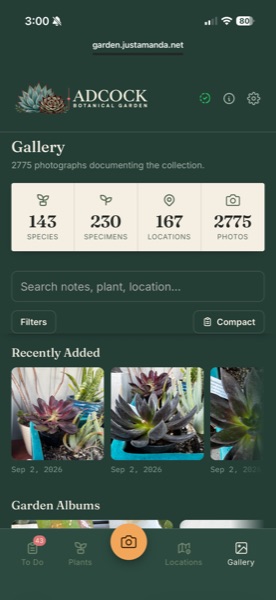
230specimens
143species
167places

Counted from the catalogue in August 2026. The point is the scale of the thing, not the precision ... by the time you read this, it is probably a little more.

Browse every species in the collection →

A Graptoveria ‘Fred Ives’ grown tall on a bare stem with its leaves spread wide, in a terracotta bowl planted with small rosettes
The Graptoveria ‘Fred Ives’ from the beginning... the legginess in question.

Favourites

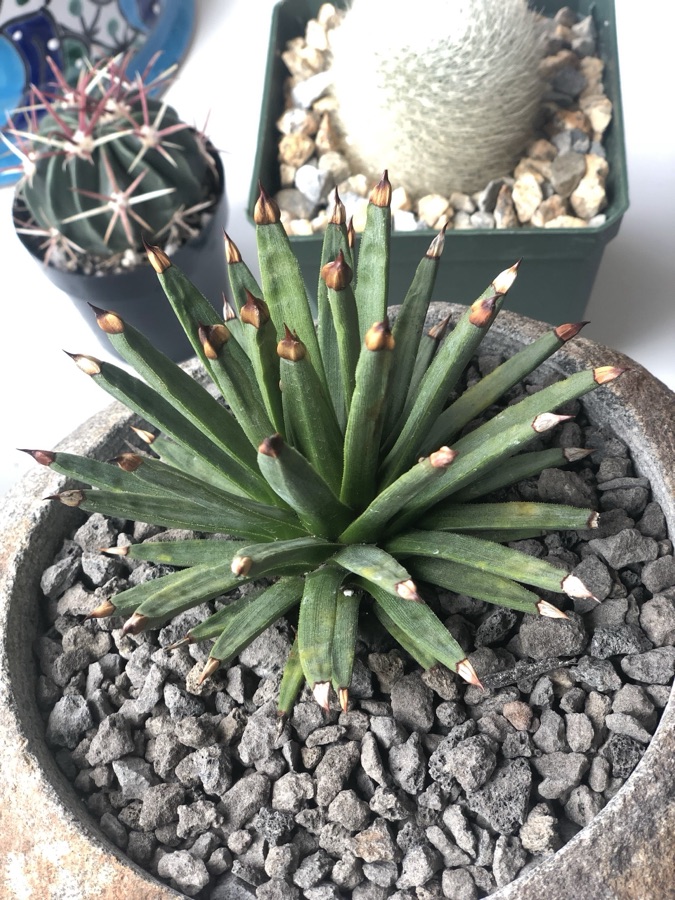
Agave albopilosa in a stone bowl, its narrow green leaves ending in pale tips, beside two small cacti

Agave albopilosa

A February birthday gift to myself in 2019. I bought it at Flora Grubb knowing exactly nothing about rare plants, thinking it was beautiful, and spending more than I’d ever spent on a single specimen. It’s the only plant from that entire haul that survived. It’s thriving now.

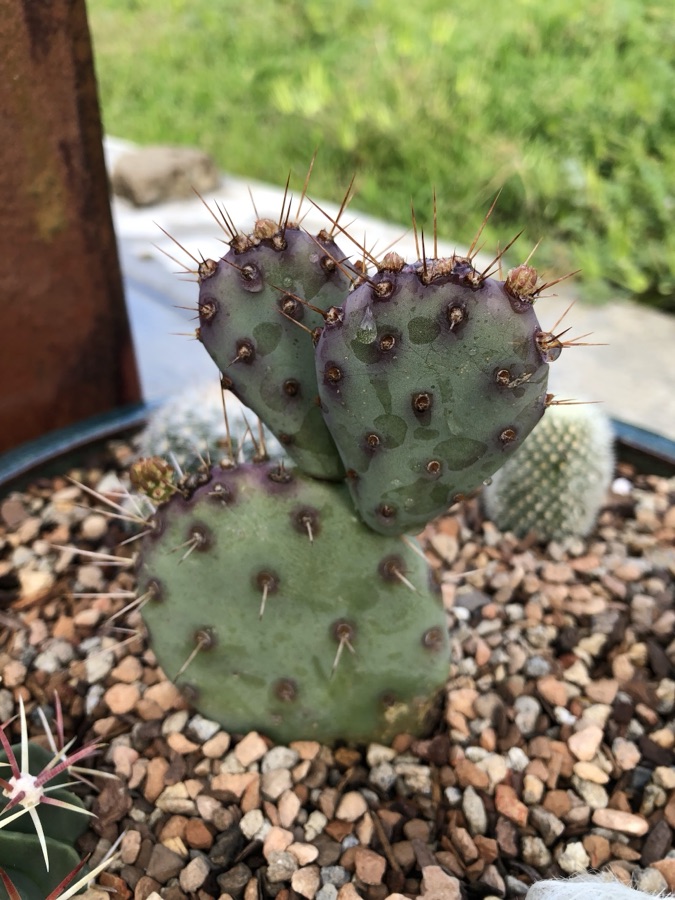
A young Opuntia santa-rita with three purple-edged pads, growing in gravel

Opuntia santa-rita

This one came to me as a tiny three-paddle plant around 2019. Now it’s roughly two feet tall. It’s been through everything with me: moves, the collection loss, the revival. Watching it grow has been like watching myself come back to life.

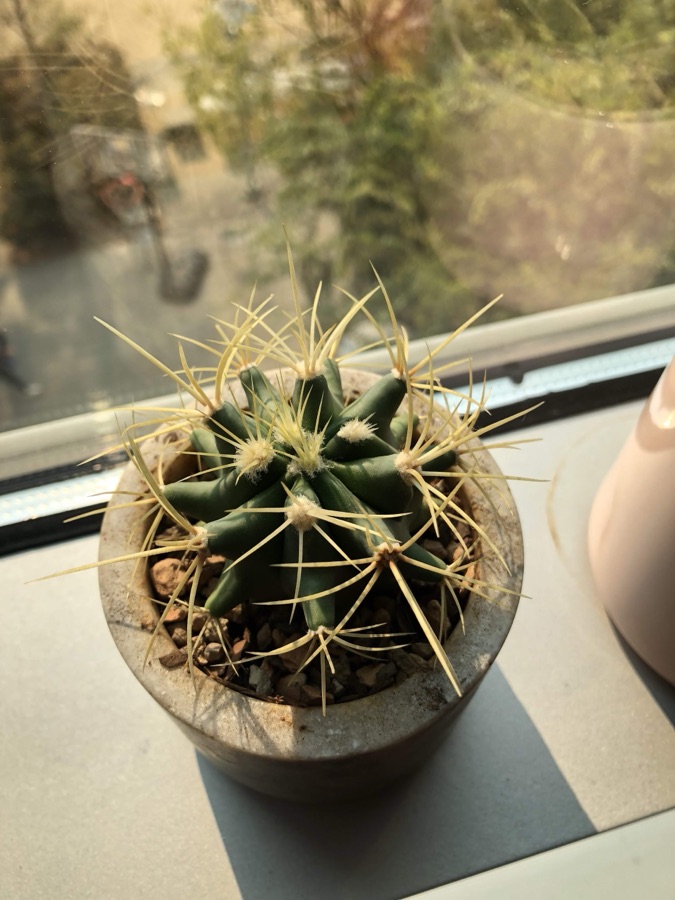
Ferocactus glaucescens, a round barrel cactus with long straw-coloured spines, in a stone pot on a windowsill

Ferocactus glaucescens

The coffee cactus

A coworker was watering this round, ball-like cactus with his coffee. I rescued it in 2019, completely unsure it would survive. Recently, I noticed new growth. It’s one of the more resilient and funny stories in the garden.

The app I built

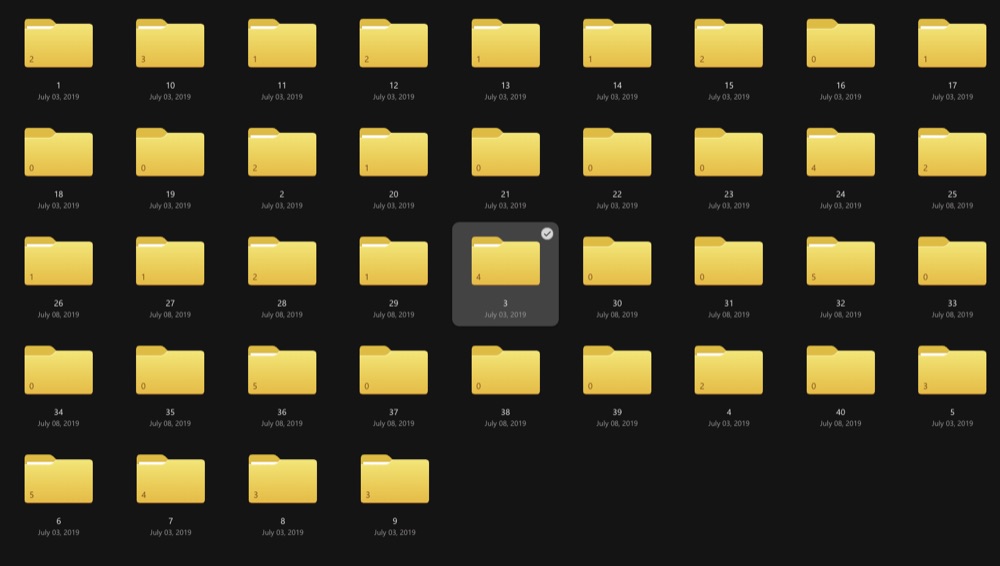
I knew what I wanted years before I could build it. Back in 2018 I wanted to track individual plants, attach photographs and log care history... the same records a botanical garden keeps. I tried doing it by hand first. In 2026 I finally had the tools to build the real version.

A file browser showing forty folders named 1 to 40, each holding between none and five photographs, all dated July 2019
The manual attempt, July 2019: a numbered folder per plant, to match the popsicle sticks. Most of them hold nothing. It lasted a couple of days.

It is called Adcock Botanical Garden. Every specimen has an accession number, a location, a photographic timeline and a care history, the way a real botanical garden keeps records.

  • Identification by AI. Point it at a photo and it suggests which of my own plants it is, or what species it might be.
  • Health checks from photographs. It reads a plant against how that species should look, and flags rot, pests or sun damage.
  • Watering, by area. Water a whole yard in one tap, or a single pot.
  • Frost and heat warnings. Wired to the forecast... a cold night produces a list of what needs bringing in, ordered as a walk through the garden.
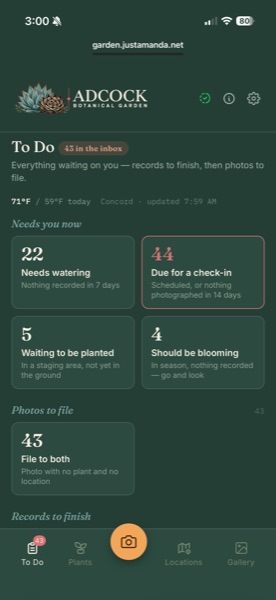
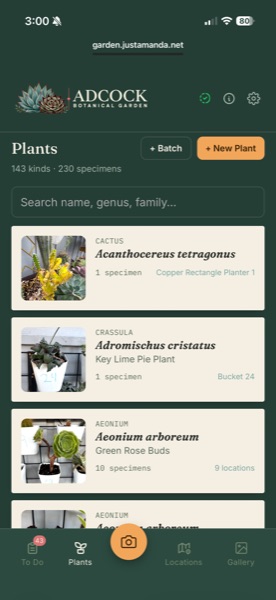
The app's To Do screen: counts for plants needing water, due a check-in, waiting to be planted, and photos still to file The plant catalogue: each species with a photograph, its family, how many specimens and where they live The photo gallery: 143 species, 230 specimens, 167 locations, 2,775 photographs

Built with vanilla HTML, CSS, and JavaScript, backed by Supabase and Google Drive. The hardest part wasn’t the code... it was working out how to model real botanical documentation in a way that stayed useful instead of turning into paperwork.

Resources I actually use

Books

Succulents and Sunshine taught me the fundamentals when I knew nothing. Debra Lee Baldwin’s books deepened that foundation. Both are worth owning if you want to move past “water it sometimes” into actual understanding.

  • Designing with SucculentsDebra Lee Baldwin
  • Succulent Container GardensDebra Lee Baldwin
  • Succulents SimplifiedDebra Lee Baldwin
  • Essential Succulents: The Beginner’s GuideKen Shelf
  • The Little Book of Cacti and Other SucculentsEmma Sibley

Nurseries

Ruth Bancroft Garden for interesting and unusual specimens... and their clearance rack, where I’ve found incredible plants at 50% off. Flora Grubb for the rare and the architectural... the Agave albopilosa above came from there. Sloat for selection and knowledgeable staff. Mountain Crest Gardens for succulents by mail, and for plant pages worth reading before you buy. Lowe’s and Ace for bulk and common plants. Most retailers source from overlapping nurseries anyway, so pick based on what you need: specialty or price.

Identification

Pl@ntNet gives me a starting lead when I’m not sure what something is. San Marcos Growers is where I verify it... their plant database is what I check care details and current names against. From there, I compare images, read botanical descriptions, and cross-reference until the name holds up. My own app has become the workflow hub... pointing at a photo, researching the name, recording what I own.